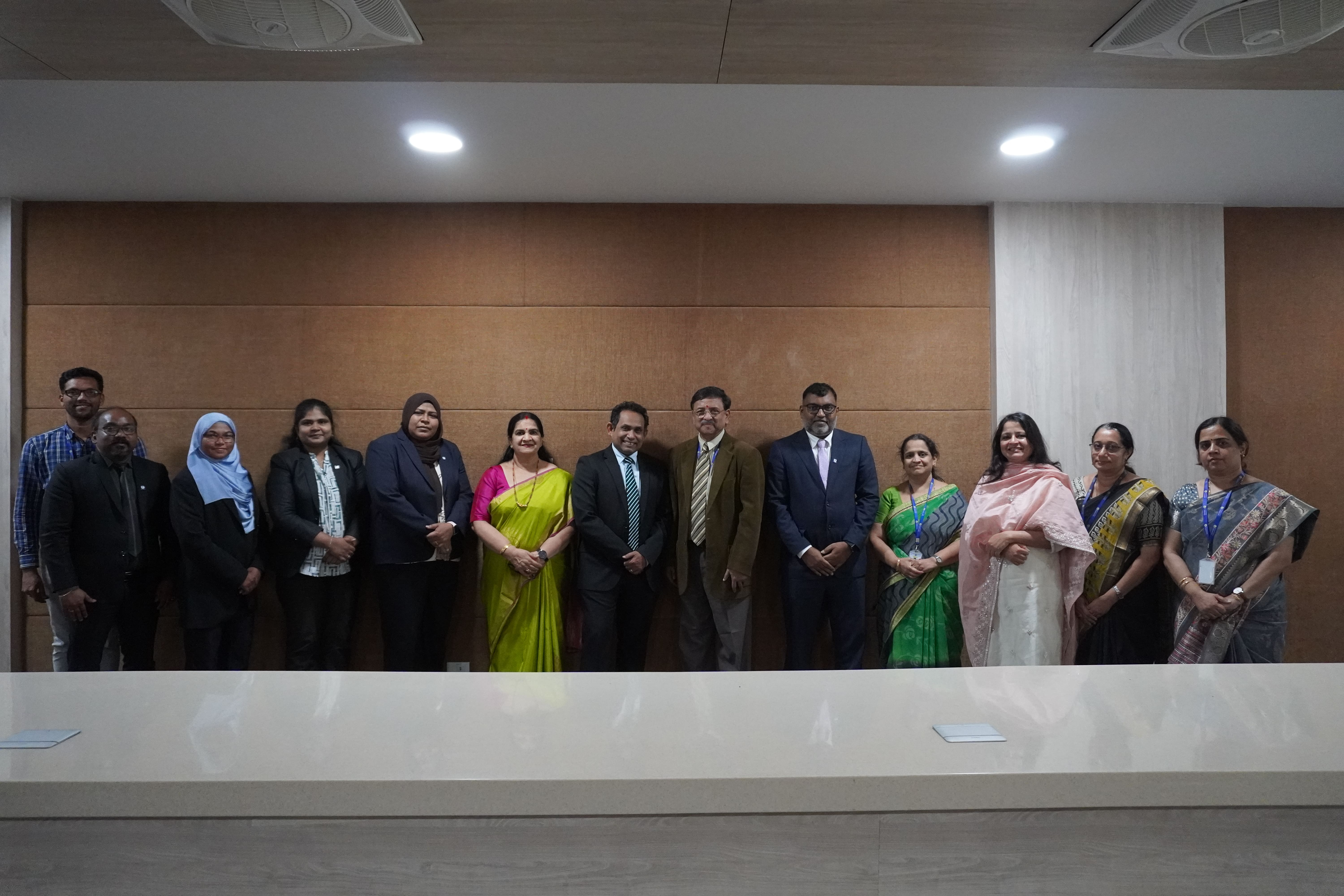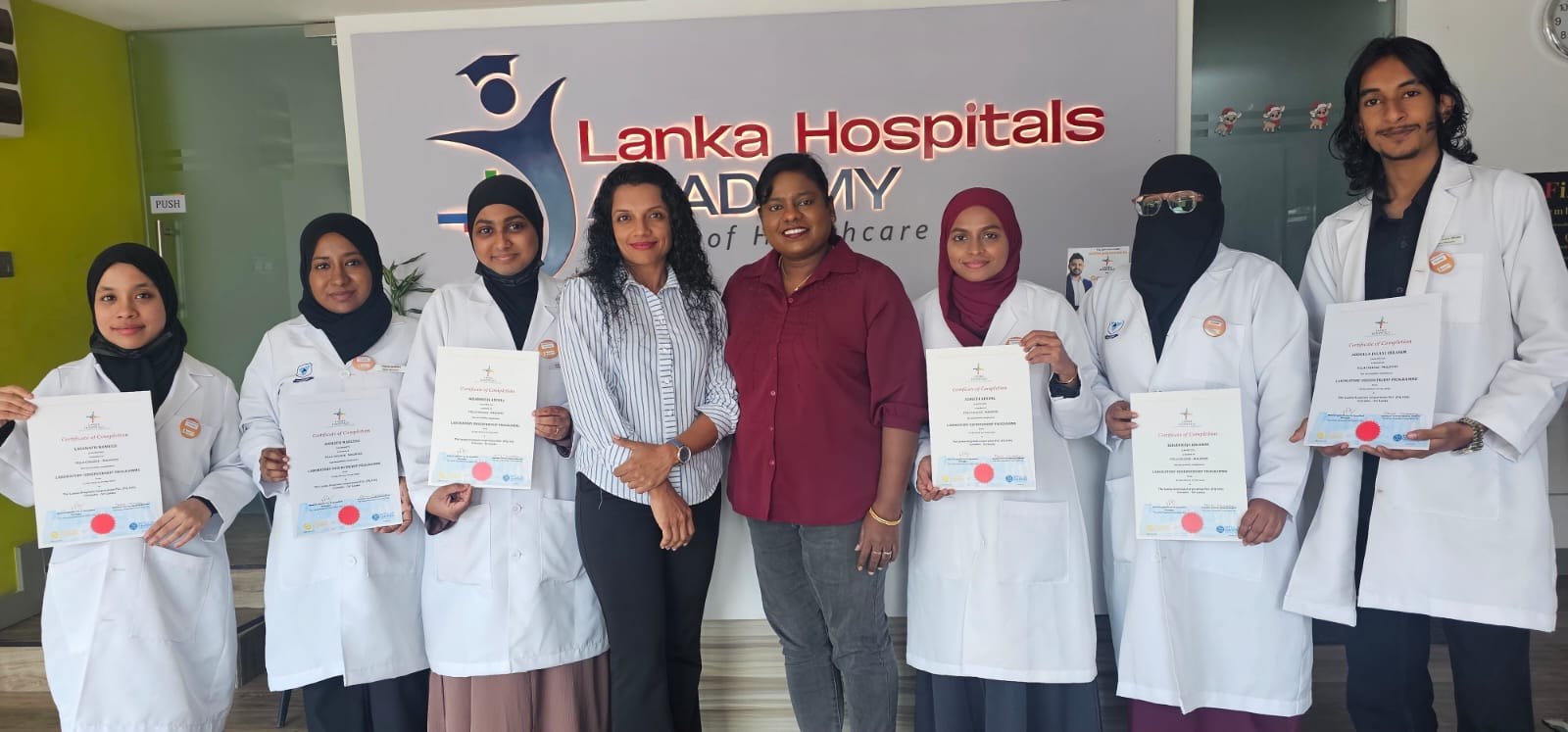
Villa College's National Certificate Level 3 in Phlebotomy (NC3P) students spent twenty days in Sri Lanka this June as part of a structured International Student Mobility Programme, gaining experience across hospital laboratories, community collection centres, and simulation training facilities. Organised jointly by the Faculty of Health Sciences (FHS) and the Centre for Foundation Studies (CFS), which together deliver the NC3P programme, the initiative ran from 4 to 23 June 2026. The programme's design reflects four consistent priorities: exposure across a range of clinical settings, alignment with international technical standards, attention to patient-centred and cultural competencies, and structured reflection following the students' return to the Maldives.
A Range of Clinical Settings
One notable feature of the programme is the range of clinical settings it covered. At Durdans Hospital, students observed laboratory workflows across the Haematology, Microbiology, and Biochemistry departments, including automation in diagnostics, barcode-based specimen tracking, and electronic laboratory information systems, along with the quality assurance practices used to process specimens to internationally recognised standards. Visits to collection centres and mobile phlebotomy units then introduced students to a different part of the same process, namely decentralised specimen collection, transportation logistics, and community-based laboratory services.
Lanka Hospitals Academy added a further layer of learning, combining direct observation with simulation-based training. Students observed outpatient specimen collection procedures, infection prevention and control measures, and specimen handling techniques, while practical demonstrations and simulation sessions using phlebotomy training models reinforced this learning under supervision. Across the full set of institutions visited, Durdans Hospital, Durdans Laboratory, Amrak Institute of Medical Sciences, Lanka Hospitals, and Lanka Academy, students were able to see different parts of the diagnostic and clinical process rather than a single setting in isolation, a range of exposure that would be difficult to achieve through a single clinical placement.
Technical Training and International Standards
The specific systems students encountered also reflect a strong technical focus. Exposure to automation in diagnostics, barcode-based specimen tracking, and electronic laboratory information systems at Durdans Hospital introduced students to infrastructure that helps prevent specimen misidentification and supports patient safety throughout the diagnostic process. Students also engaged with quality management systems and international quality assurance practices, which support consistency in how laboratory results are interpreted and used across different healthcare settings.
At Lanka Hospitals Academy, this technical grounding was reinforced through infection prevention and control measures, patient safety protocols, and specimen handling techniques, delivered through practical demonstration and simulation. Interactive sessions with laboratory scientists and senior phlebotomists gave students further insight into emerging trends in laboratory medicine and quality management. This exposure to systems used internationally complements the technical skills the NC3P programme is designed to build, supporting students' readiness for entry into the healthcare workforce.
Patient-Centred Care and Global Citizenship
Alongside this technical focus, the programme placed clear emphasis on patient-centred care, which appears both as a broad theme alongside contemporary laboratory practices and global healthcare standards, and as a specific outcome of students' interactions with healthcare professionals, alongside clinical governance and international best practice. At Lanka Hospitals Academy, this included attention to ethical practice and patient safety protocols alongside the procedural aspects of specimen collection, while interactive sessions with laboratory scientists and senior phlebotomists addressed patient communication as a specific professional competency. Phlebotomy is often a patient's first and most frequent point of physical contact with a healthcare system, which makes this interpersonal dimension closely connected to the technical one.
The programme's cultural component reflects a related aim. A visit to Nuwara Eliya was included specifically to promote intercultural understanding, teamwork, adaptability, and global citizenship, qualities that also support the kind of communication and adaptability that patient-centred care requires. Taken together, these elements indicate that the programme's focus extended beyond technical skills alone.
Reflection and Application
Following the completion of the international component, students took part in structured reflection sessions at Villa College. In these sessions, they evaluated their learning experiences, compared healthcare practices across the different institutions visited, and considered how international best practices might apply within the Maldivian healthcare context. This reflection process gave students the opportunity to connect their observations in Sri Lanka to their future practice, supporting the programme's stated aim of strengthening students' readiness for employment and continued professional development.
As Villa College continues to expand its global partnerships, this mobility programme reflects the College's broader commitment to delivering internationally focused education. For a technical qualification whose graduates will go on to support diagnostic and laboratory services across the Maldivian healthcare system, that international dimension has practical relevance extending well beyond the twenty days students spent in Sri Lanka.
Taken together, the breadth of clinical settings, the alignment with international technical standards, the attention to patient-centred and cultural competencies, and the structured reflection process describe a programme that extended beyond accumulated clinical hours alone. Through this combination, the Faculty of Health Sciences and the Centre for Foundation Studies aimed to strengthen students' professional confidence and technical knowledge, supporting their readiness for future employment in the Maldivian healthcare sector.