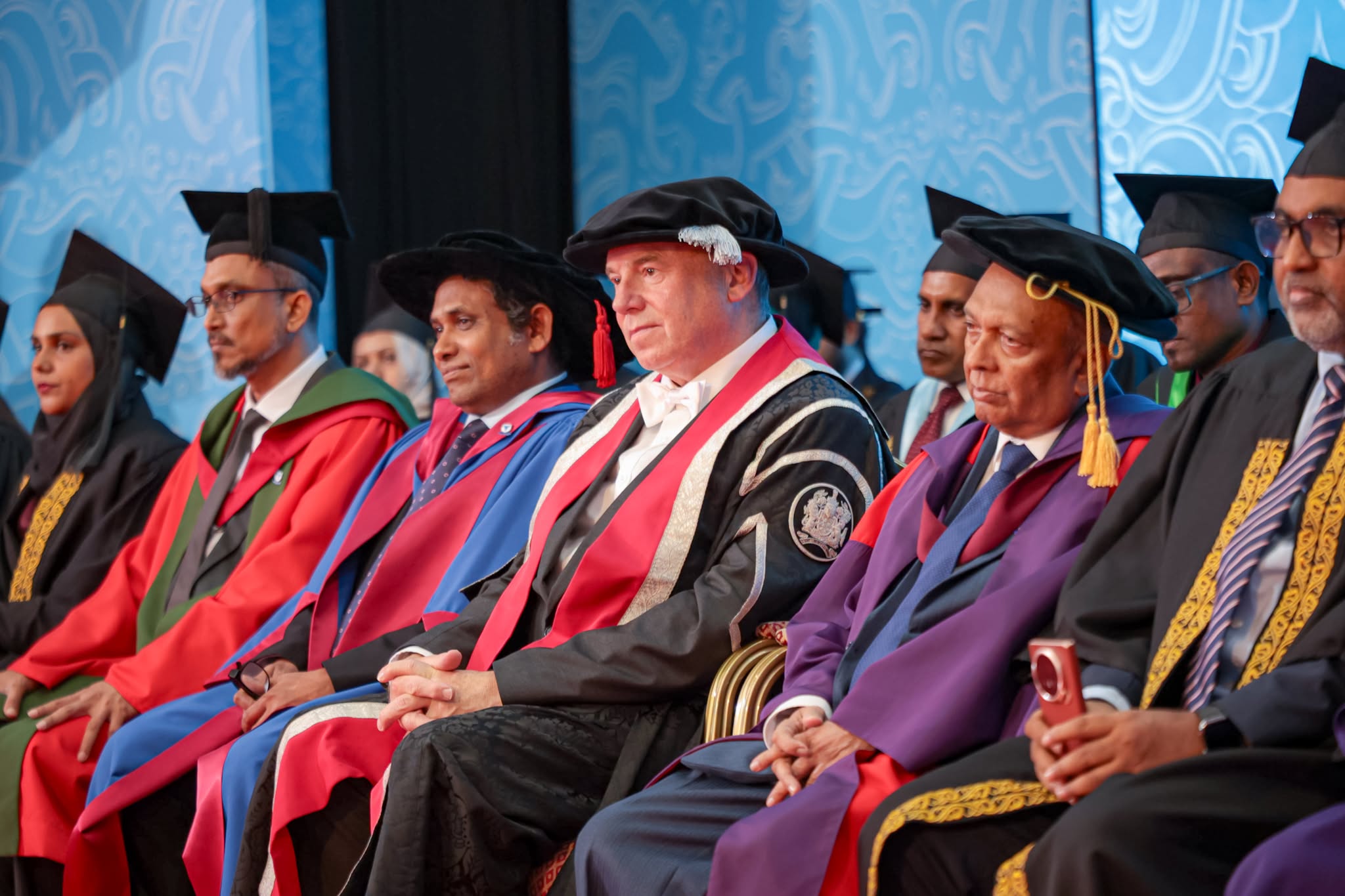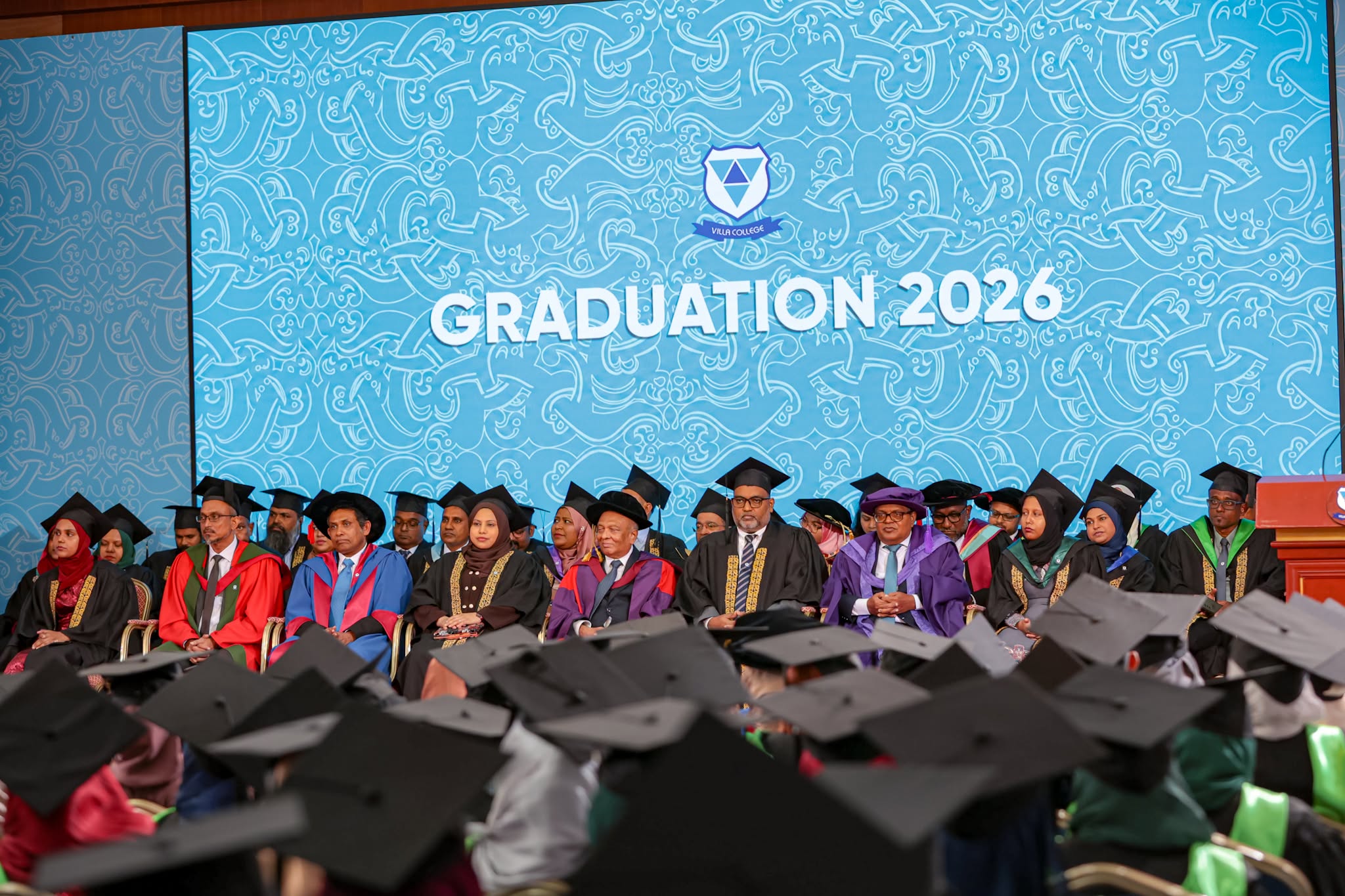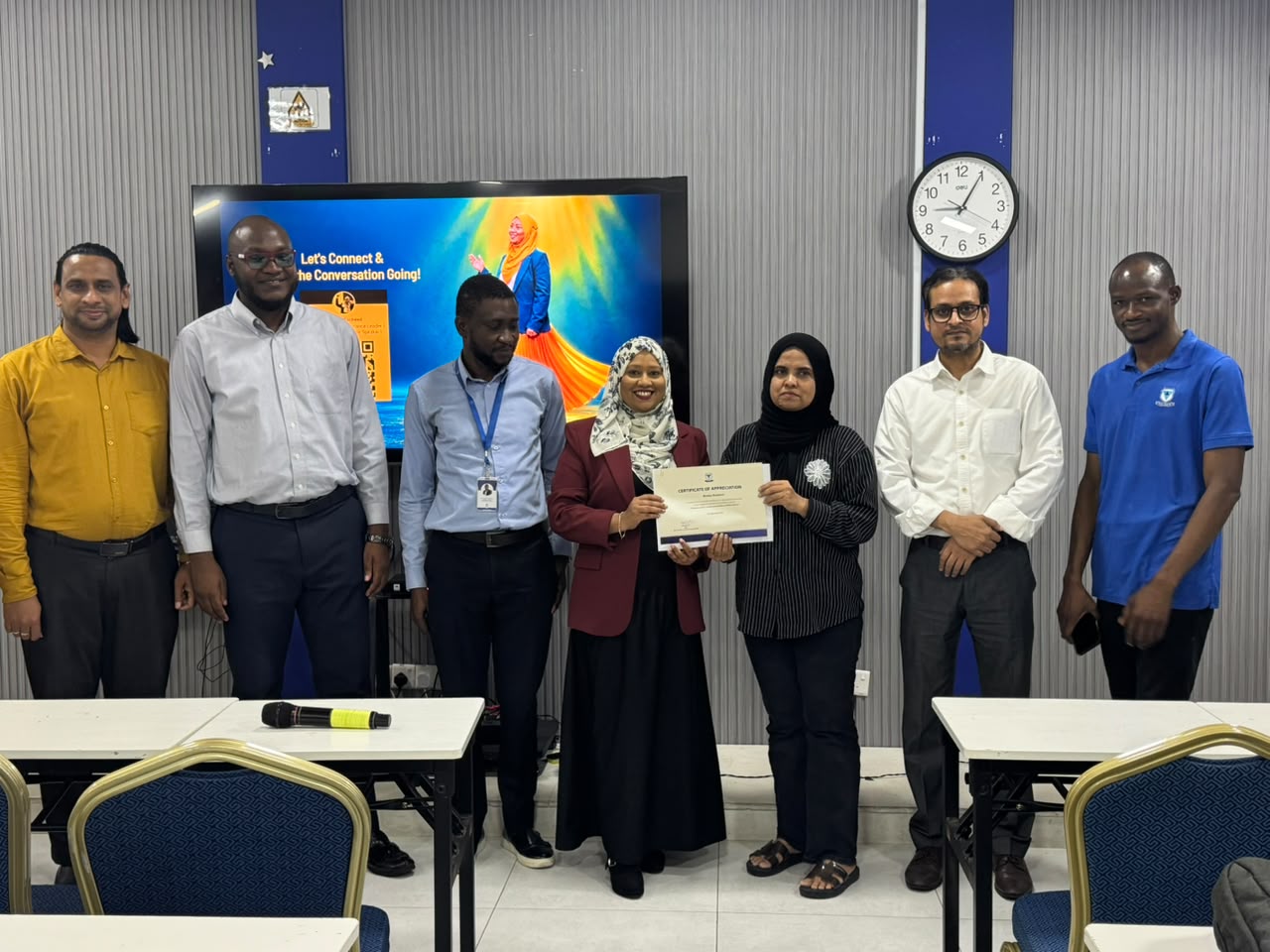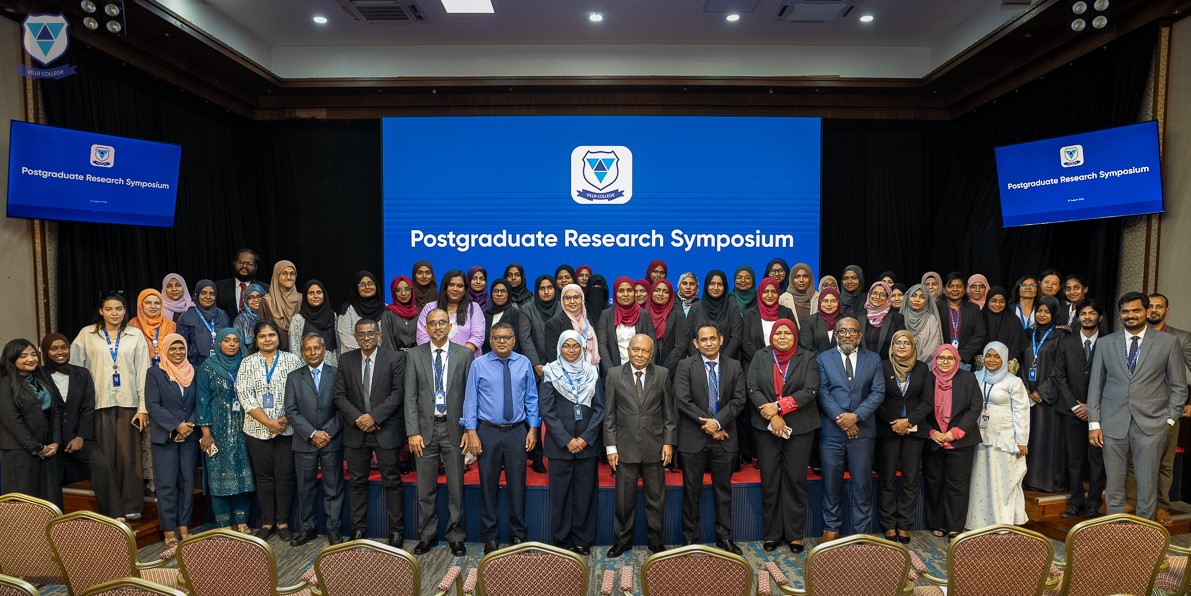
Villa College convened its Postgraduate Research Symposium on Saturday, 22 August 2026, bringing together graduating postgraduate students, faculty members, and academic leaders to examine evidence-based solutions for national and community development. The symposium provided a structured platform for students to defend their dissertations and display empirical research across disciplines including education, public health, nursing, business administration, organisational psychology, and educational leadership. The opening ceremony was officiated by the Minister of State for Education, Higher Education and Skills Development, Honourable Dr Abdulla Nazeer.
Opening the proceedings, Dean of the Centre for Postgraduate Studies, Dr Ibrahim Latheef highlighted strategic curriculum enhancements, such as early supervisor allocation and the adoption of journal-style dissertations to facilitate publication in high-impact, Scopus-indexed journals. Emphasising the broader purpose of postgraduate scholarship, Dr Latheef stated that "research should not remain confined to a dissertation, a report or a classroom," noting that "its true value is realised when it contributes to knowledge, inform policy and professional practice, addresses the challenges facing our communities and improving people's lives." Commending the college's trajectory since its establishment in 2007 with twenty students to an institution now offering over 150 programmes, State Minister Dr Abdulla Nazeer observed that "Villa College has made a remarkable contribution to the development of higher education in the Maldives" and affirmed that its institutional achievements serve as "a source of pride not only for Villa College, but also for the Maldivian higher education sector." Looking to the future, Dr Nazeer shared his perspective on the institution's evolution, stating, "It is also my sincere dream to see Villa College progress to a next level of institutional status in the future. Considering its growth, academic capacity, research culture, national research and international recognition, I believe Villa College has the potential to make an even greater contribution to the country at a higher level." Reminding students of the ethical standards required in scholarship, Dr Nazeer added that "a researcher's greatest asset is not a qualification or publication, it is credibility."
The symposium featured two thematic panel discussions addressing systemic issues in key public sectors. The first panel, organised by the Faculty of Educational Studies under the title of unpacking student disengagement and actionable school solutions, evaluated the root causes of student absenteeism. Drawing upon educational data and pedagogical insights, panellists demonstrated that persistent absence is rarely a simple behavioural issue of student reluctance, but rather the culmination of an ongoing cycle involving academic frustration, rigid assessment structures, peer bullying, and inter-island transport challenges. The discussion highlighted the need for educational institutions to move beyond punitive attendance measures and focus on creating supportive, inclusive environments that foster peer support networks, active learning, and a meaningful sense of school belonging.
The second panel, conducted by the Faculty of Health Sciences on the hidden costs of caregiving, synthesised findings from five systematic reviews comprising 93 included studies across hospital and community healthcare settings. Panellists explored the interconnected challenges of nurse burnout, emotional exhaustion, work-related musculoskeletal disorders, chronic back pain, and shift-induced sleep disruption, alongside their impact on medication safety. A central finding of the panel was that healthcare organisations cannot depend solely on individual resilience programmes or sleep hygiene advice to mitigate workforce fatigue. Instead, effective healthcare governance demands systemic interventions, including ergonomic equipment, predictable duty rotas, safe staffing thresholds, and non-punitive incident reporting mechanisms that address institutional pressures directly.
Following the panel discussions, the symposium proceeded to parallel presentation sessions across two floors of the campus, featuring poster presentations and oral dissertation defences across multiple postgraduate programmes. Academic excellence was formally recognised at the close of the event, with awards presented by the Deputy Vice Rector for Research and Innovation, Assistant Professor Dr Mohamed Adil. The Best Presentation Award was presented to Master of Public Health candidate Dr Angkan Ishty Chowdhury for the research presentation titled "Psychosocial Work Environment, Coping Strategies, and Health-Seeking Behavior among Migrant Hospitality Workers in Asia: A Systematic Review". The Best Poster Award was conferred upon Master of Education in Teaching candidate Fathimath Zuhaa Hamdhoon for the research presentation titled "Teachers’ attitudes and challenges in implementing inclusive education in mainstream classrooms at X School."
Delivering the keynote and closing remarks, Vice Rector Associate Professor Dr Ali Najeeb guided graduates on developing an authentic researcher mindset. Dr Najeeb emphasised that "the postgraduate dissertation should not simply demonstrate that you have completed an academic requirement," but rather "it should demonstrate that you have begun to think like a researcher" and build a professional identity within the research community. Addressing methodological design, Dr Najeeb stated that "the best methodology is the methodology that is appropriate to your research questions, your research problems," rather than one selected for artificial complexity. He urged researchers to maintain scholarly humility and critical reflexivity, advising that "your findings are evidence, they are not absolute truth" and reminding students to understand what their research can tell us and what it cannot. Dr Najeeb also announced that Villa College will expand these academic forums into bi-annual or tri-annual research summits and introduce a dedicated Best Dissertation Award to further celebrate and incentivise rigorous postgraduate scholarship.