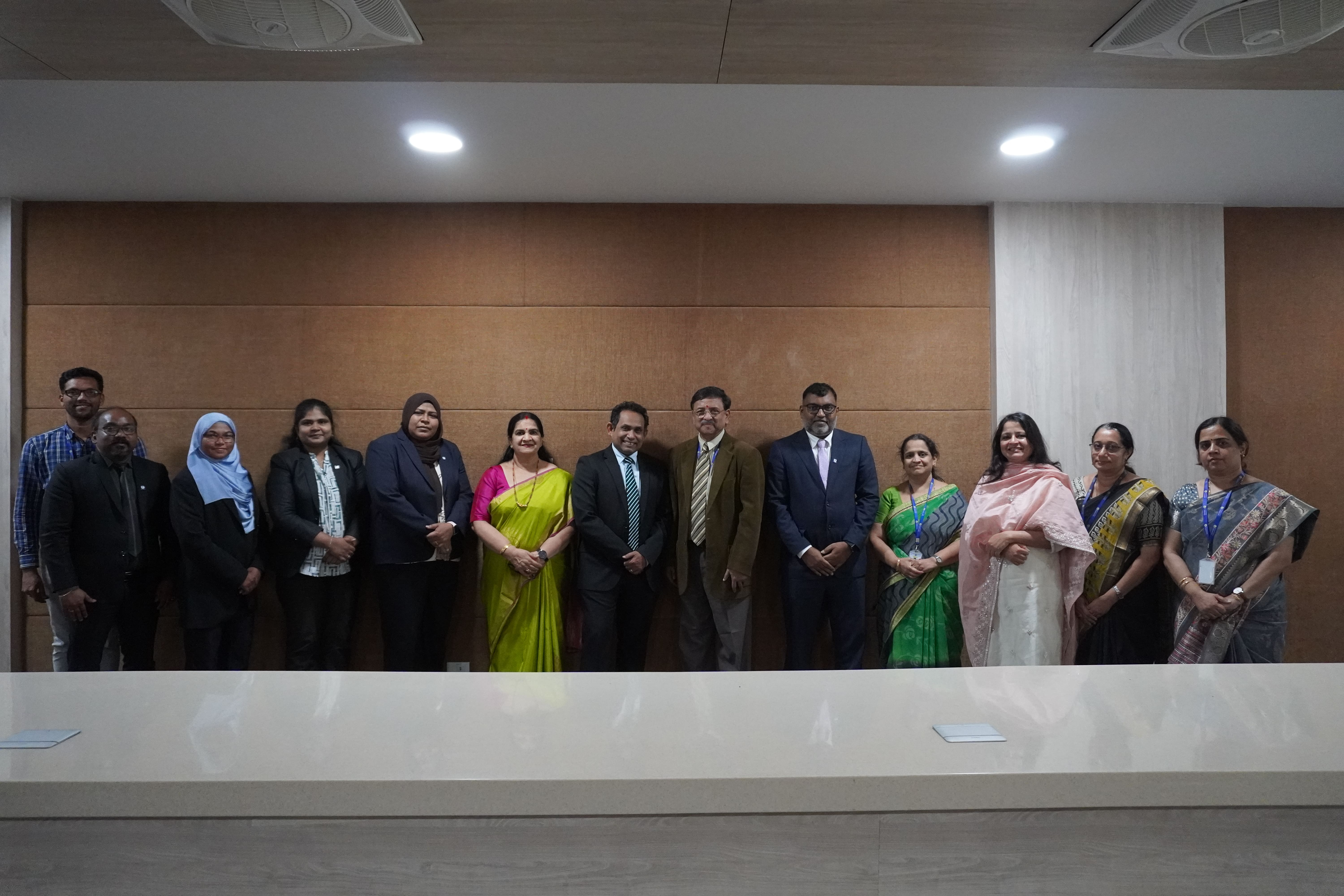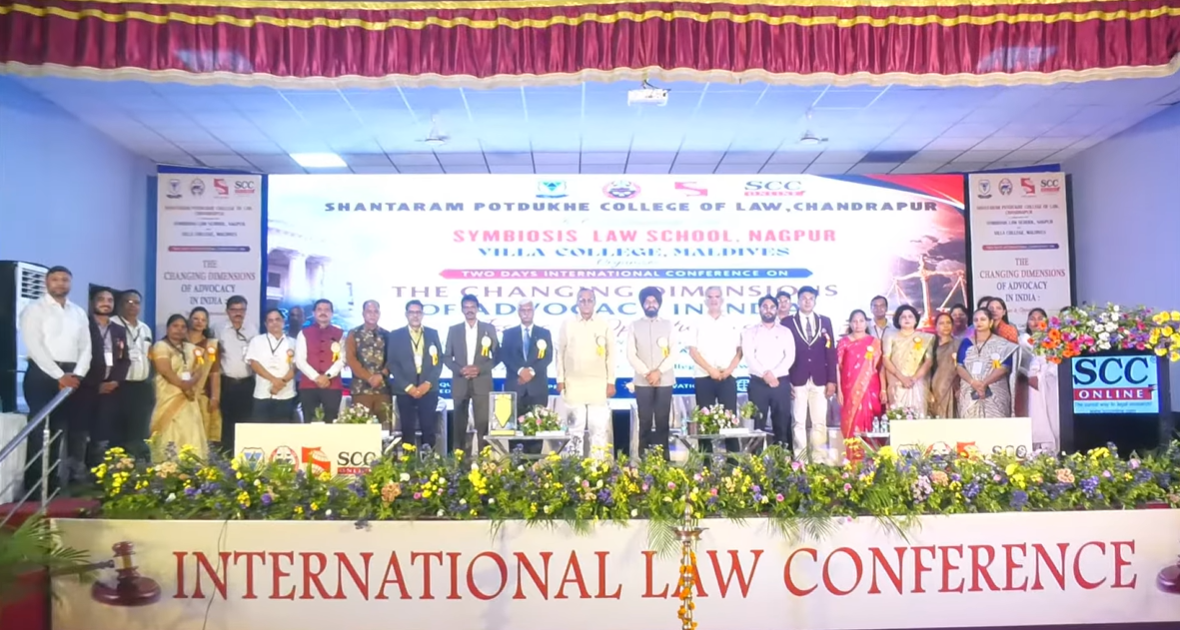
Villa College's Faculty of Shariah and Law recently served as a co-organiser and international partner for the Two-Day International Conference on The Changing Dimensions of Advocacy in India: Issues and Opportunities, Bridging the Gap Between Legal Education, Practice and Regulation. Held on 27 and 28 March 2026 in Chandrapur, India, this collaborative event was jointly organised with Shantaram Potdukhe College of Law and Symbiosis Law School, Nagpur. The gathering brought together legal academics, practitioners, research scholars, members of the judiciary, and law students to address how professional regulatory bodies and educational systems can collectively navigate rapid digital transformations while bridging the divide between theoretical study and courtroom practice.
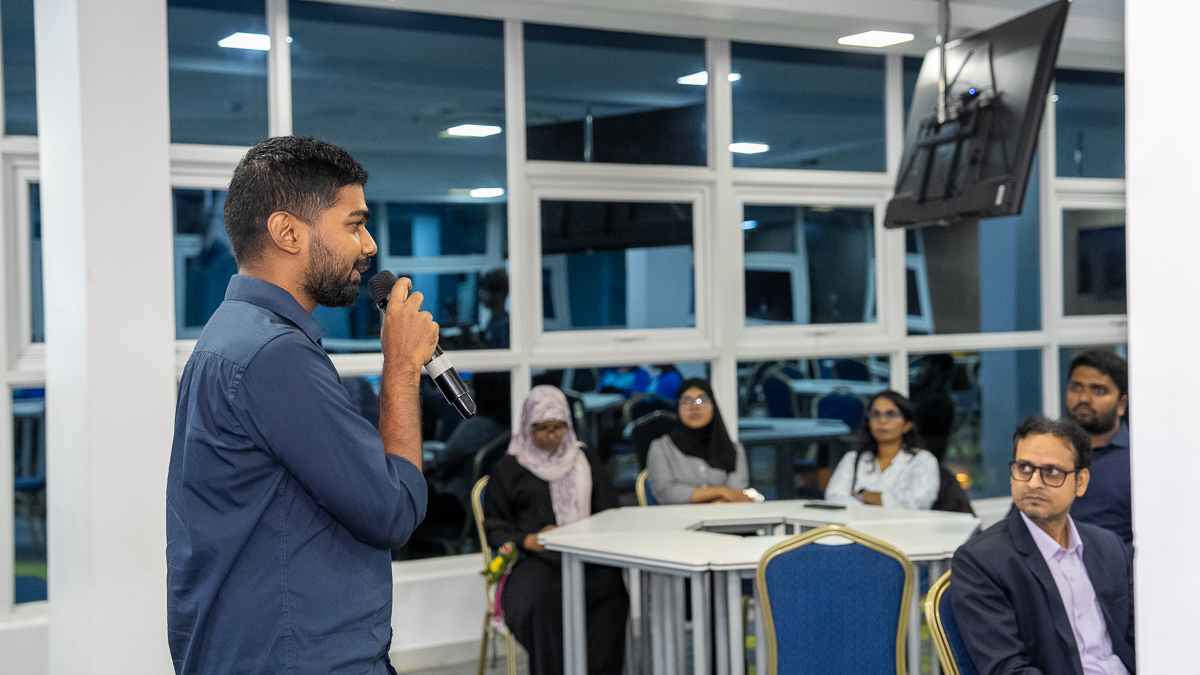
A central theme of the conference explored the vital need to transition from traditional classroom learning to competency-based legal education. Historically, legal training has often prioritised academic theory over practical application, occasionally leaving new graduates unprepared for the realities of the courtroom. Addressing this contrast during the Inaugural Ceremony, Mr. Amish Abdullah, Senior Lecturer at Villa College, delivered the Institutional Address and highlighted the Certificate of Licensing Training Programme. Introduced by the Bar Council of the Maldives under the Legal Profession Act, this mandatory professional licensing pathway requires a minimum of 500 hours of structured skills training. The comprehensive curriculum encompasses advocacy, court placements, moot exercises, and professional ethics. By embedding these practical requirements into the licensing process, institutions can successfully align student capabilities with employer expectations and the rigorous demands of professional advocacy. Furthermore, the dedication of the Faculty to clinical legal education was reinforced on the second day when Mr. Mohd Arsh Shery chaired a technical session focusing on advocacy training reform and access to justice. This session featured keynote contributions from industry leaders such as Mr. Prabal Dixit of Bajaj Allianz General Insurance and Associate Professor Ms. Dema Lahm of JSW Law School, Bhutan, demonstrating the sustained engagement of the Faculty with the practitioner and academia interface.
Another major focus of the academic discourse centred on the rapid technological transformation of the legal sector, particularly the expanding use of artificial intelligence and the rise of digital courts. Rather than passively adopting new technologies, the legal community must develop robust ethical frameworks for technology-assisted advocacy. Illustrating this proactive approach, Villa College presented its integration of artificial intelligence into academic assessment, an innovative initiative driven by the ERASMUS Digit Asia Project. As a major contributor from the Maldives to this project, Villa College ensures students are not merely trained to use artificial intelligence tools. Instead, they learn to critically evaluate algorithmic outputs, identify inherent limitations, and reflect upon their professional and ethical responsibilities. This critical engagement stands in stark contrast to unguided technological reliance, ensuring that future lawyers view artificial intelligence as a tool to enhance, rather than replace, rigorous legal analysis. Highlighting this subject further, Mr. Abdullah chaired a technical session on artificial intelligence and legal technology, presiding over a keynote address by Mr. Rajeev Rambhatla of Luthra and Luthra Law Offices India alongside scholarly presentations on the regulatory future of technology-assisted legal practice.
The conference and the Faculty's contributions carry direct relevance to the United Nations Sustainable Development Goals. The Certificate of Licensing Training Programme, with its emphasis on structured skills training and competency-based assessment, advances SDG 4 on Quality Education by raising the standard of professional preparation offered to law graduates. The conference's sustained focus on advocacy reform, access to justice, and professional ethics aligns with SDG 16 on Peace, Justice and Strong Institutions, reinforcing the principle that well-trained legal professionals are essential to the functioning of fair and effective justice systems. The collaborative nature of the conference itself, bringing together institutions from the Maldives, India, and Bhutan in a shared academic endeavour, embodies SDG 17 on Partnerships for the Goals. These alignments are not incidental. They reflect a deliberate institutional approach at Villa College, where curricular innovation, professional training, and international engagement are designed to serve both national development priorities and broader global commitments.
Meaningful academic partnerships across borders remain crucial for cultivating a forward-thinking, employer-responsive legal curriculum. The conference facilitated high-level knowledge exchange through distinguished participation from regional leaders, including Former Judge of the Bombay High Court Honourable Justice A. G. Gharote, Gondwana University Vice Chancellor Dr. Prashant Bokare, and Bombay High Court Judge Honourable Justice Smt. Urmila Joshi-Phalke, who presided over the valedictory session. By partnering with leading law schools in South Asia, Villa College actively contributes original pedagogical approaches to the global academic dialogue. The active academic contributions of the Faculty of Shariah and Law reflect a broader strategic vision for international outlook, community development, and impactful collaboration. Fostering these cross-border relationships helps strengthen the presence of the Maldives in the global academic community while ensuring that justice professionals are prepared to navigate the evolving complexities of the modern legal landscape.