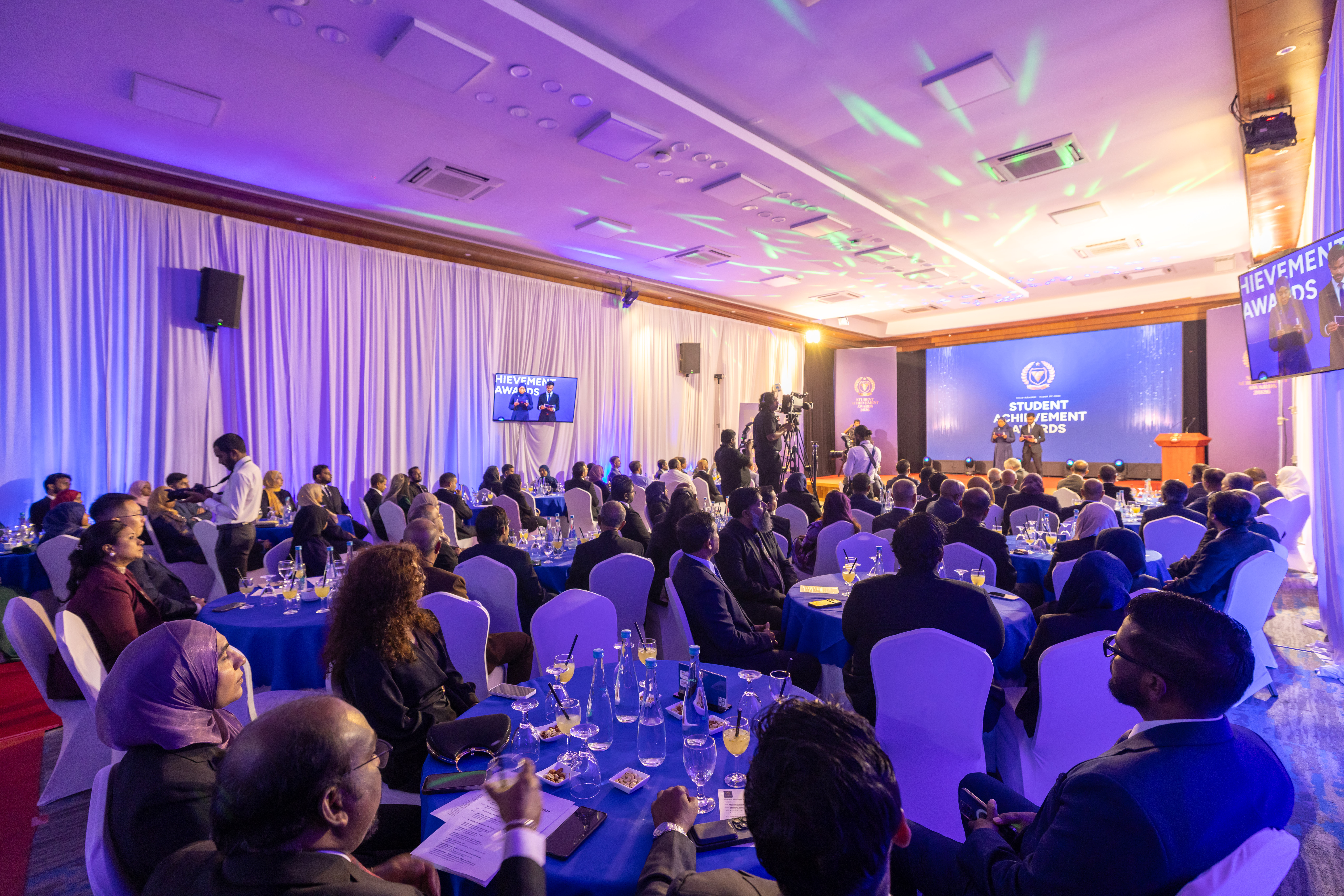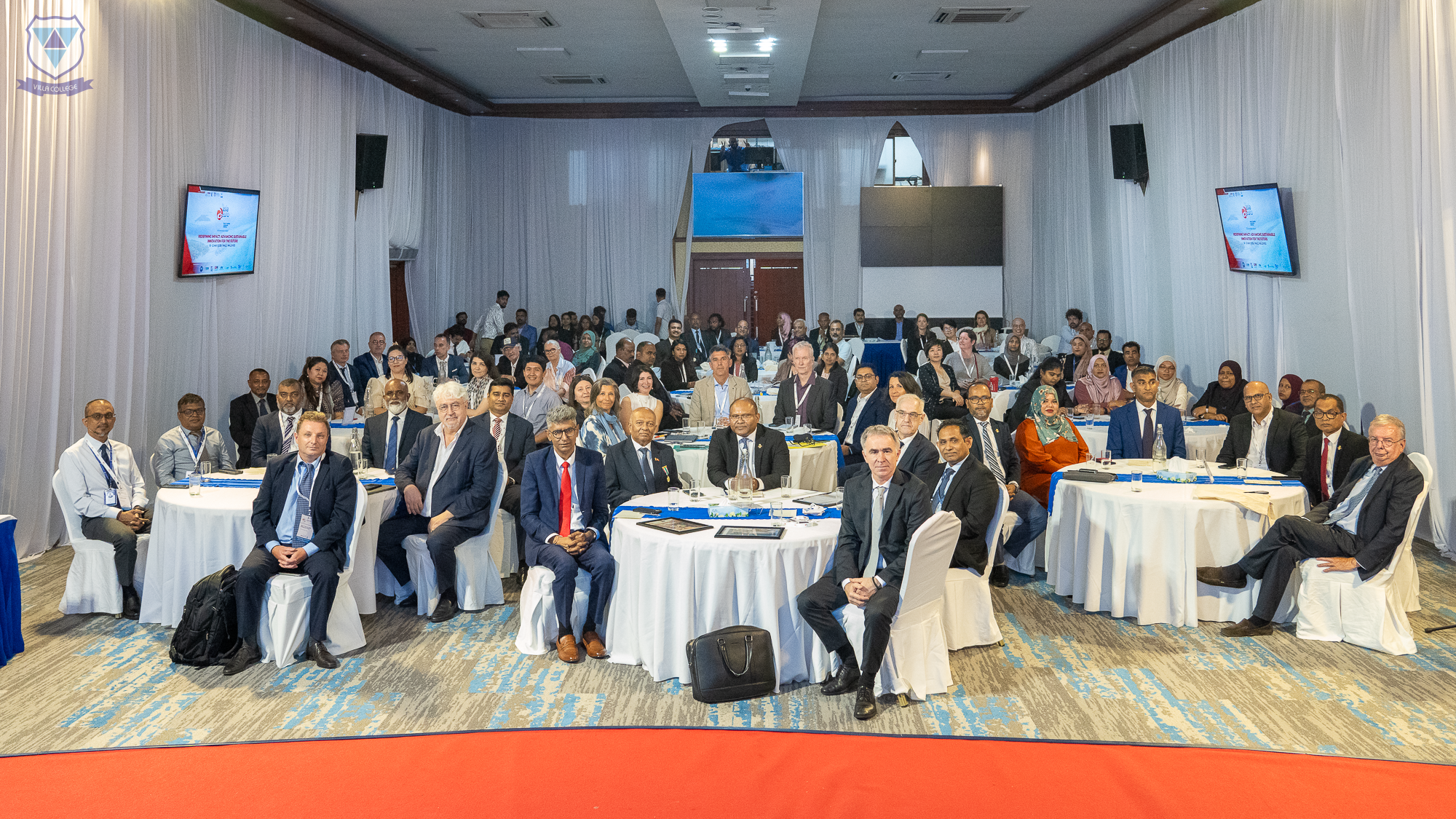
Villa College is hosting the 9th Asia Euro Tourism, Hospitality and Gastronomy Conference from 10 to 12 May 2026 at its QI campus, bringing together scholars, policymakers, and industry practitioners under the theme "Redefining Impact: Advancing Sustainable Innovation for the Future." Held alongside the 22nd Graduate Research Colloquium in the Main Hall on the ground floor of the QI Campus, the three-day conference is positioned as a platform for examining how three of the world's most consequential service industries can chart a more resilient, responsible, and future-ready course.
The conference arrives at a moment when the tourism, hospitality, and gastronomy sectors are being asked to do more than generate economic value. They are being called to mitigate climate risk, safeguard cultural heritage, protect travellers and host communities, and create inclusive economic opportunity for local stakeholders. Across keynote addresses, panel discussions, and concurrent academic sessions, the programme is designed to translate this broad mandate into specific, transferable insights for industry leaders, policymakers, and researchers.
A defining feature of the conference is its explicit alignment with established international sustainability frameworks. The programme situates its discussions within the Sustainable Development Goals, the principles of Environmental, Social, and Governance, the Global Sustainable Tourism Criteria, and the United Nations' 2030 Agenda for Sustainable Development. This anchoring is significant because it moves the conversation beyond aspirational language and into the structured criteria by which sustainable performance is increasingly measured in the global marketplace.
The conference takes the view that innovative sustainable practice in these industries operates across several interconnected dimensions. Environmental preservation, social equity, and cultural heritage conservation are presented not as competing priorities but as mutually reinforcing outcomes of well-designed strategy. Sustainable innovation, in this framing, is what enables operators and destinations to mitigate climate risks, enhance food security, safeguard historical landmarks, and strengthen the resilience of communities against emerging global challenges. The emphasis throughout the programme is on long-term value creation rather than short-term commercial gain.
The conference is jointly organised by Villa College, ISTHIA Université Toulouse – Jean Jaurès (UT2J), and Taylor's University, in collaboration with the University of Toulouse, the National Centre for Scientific Research (CNRS), Unité de recherches Transitions Organisations Politiques Inégalités (UTOPI), Taylor's Toulouse University Centre, the Centre for Asian Modernisation, the ASEAN Tourism Research Association, the Cluster for Research and Innovation in Tourism (CRiT), Taylor's Sustainable Tourism Impact Lab, Instituts Nationaux De Tourisme (INNTO), Association Tourisme Recherche et Enseignement Supérieur (AsTRES), and L'Association internationale des sociologues de langue française (AISLF).
The breadth of this collaboration matters. It places Maldivian higher education, through Villa College, at the centre of a sustained research conversation linking French, Malaysian, and broader Asian and European institutions. For a small island developing state whose economy depends substantially on tourism, this kind of structural engagement with international research networks offers a route to influence and adapt the very frameworks that shape global industry standards.
The opening day featured introductory addresses from Professor Barry Winn, Vice Chancellor and President of Taylor's University, and Associate Professor Dr Cyrille Laporte, Dean of ISTHIA, representing Professor Emmanuelle Garnier, President of the University of Toulouse – Jean Jaurès. Associate Professor Ali Najeeb, Vice Rector of Villa College, delivered the welcoming address.
The opening keynote was delivered by Dr Abdulla Niyaz, Minister of State for Tourism, whose professional background reflects the conference's central concerns. With a doctorate in Tourism and Disaster Management, Dr Niyaz has worked across hospitality operations, franchise quality assurance, and policy oversight in both New Zealand and the Maldives. His current portfolio places emphasis on strengthening regulatory frameworks, ethical leadership, and accountability mechanisms within tourism governance. The choice of opening speaker signals an intent to ground the conference's sustainability discussion in the practical realities of compliance, disaster resilience, and the architecture of public policy that ultimately determines whether ambitious sustainability commitments can be operationalised.
The Tourism panel session, titled "Contemporary challenges of tourism mobility worldwide: innovations, sustainability, and new travel experiences," examined a question central to the future of the industry. As international mobility evolves, destinations and operators are confronting the simultaneous demands of streamlined movement, environmental responsibility, and authenticity of experience.
The discussion was structured around several converging concerns. The first was the role of emerging technologies, including modernised border crossings, biometric systems, and digital flow management, in making travel both more efficient and more secure. The second was the gradual integration of regenerative tourism principles, which reframe the purpose of travel from extraction to restoration, asking how visitor activity can actively support rather than burden local environments and communities. The third was the changing nature of traveller expectations, with growing interest in slower-paced, immersive, and community-based experiences that redefine what travel means in the first place.
The roundtable was co-chaired by Professor Dr Neethiahnanthan Ari Ragavan, Executive Dean of the Faculty of Social Sciences and Leisure Management at Taylor's University and President of the ASEAN Tourism Research Association, and Sylvie Rouillon Valdiguie of ISTHIA, University of Toulouse – Jean Jaurès. The panel brought together academic and industry voices including Professor Dr Jacinthe Bessière and Stéphanie Bensalem of ISTHIA, Mohamed Shareef, former Minister of State for Environment, Climate Change, and Technology of the Maldives, Dr Nagathisen Katahenggam of Taylor's University, and Ahmed Nadheem, Assistant Director of Human Resources at The Ritz-Carlton Maldives, Fari Islands. The combination of sociological, territorial, and operational perspectives was designed to surface structural changes that are reshaping tourist mobility in ways no single discipline could adequately address.
The conference's second keynote was delivered by Associate Professor Anahita Malek and Dr Alexandra Constantinescu of Buckinghamshire New University in the United Kingdom. Dr Malek leads research on social innovation, community engagement, and place-making within tourism and cultural contexts, with a current comparative project examining gastronomy in Penang, Malaysia, and Sardegna, Italy, as a catalyst for community empowerment and inclusive urban transformation. Dr Constantinescu's research sits at the intersection of food culture, migration, ethnic identity, and social cohesion, with particular emphasis on how migrant communities negotiate culinary identity through processes of acculturation.
Their work fed directly into the Gastronomy panel, "Fusion or Confusion? The Fine Line Between Innovation and Appropriation." The session was co-chaired by Associate Professor Dr Cyrille Laporte of the University of Toulouse – Jean Jaurès, CERTOP UMR-CNRS, and Associate Professor Dr Joy Sheelah Baraero-Era of Far Eastern University in the Philippines. Panellists included Associate Professor Dr Frederic Zancanaro of ISTHIA, Mariyam Noordeen, Founding President of the Chefs Guild of Maldives, Associate Professor Dr Salini Devi Rajendran of Taylor's University, Chef Mohamed Adil, Executive Chef of dusitD2 Feydhoo Maldives, and Associate Professor Dr Anne-Claire Yemsi-Paillissé of ISTHIA.
The conversation addressed a tension that has become central to contemporary culinary practice. Innovation is widely celebrated, yet the boundary between thoughtful creative exchange and the misappropriation of cultural heritage is rarely well defined. For the Maldives and for many destinations whose local food cultures are deeply tied to identity and tradition, this distinction has direct economic, social, and ethical consequences.
Beyond the keynote and panel discussions, the conference incorporates two sets of concurrent sessions covering tourism, hospitality, gastronomy, and the changing dynamics of work and labour in the hospitality industry. These sessions provide a platform for emerging research and applied case studies from a wide range of institutions, ensuring that the conference is not solely a forum for senior voices but also a setting in which newer scholars and practitioners can contribute to the discussion.
The co-location of the 22nd Graduate Research Colloquium with the conference is a deliberate choice. It brings postgraduate researchers into direct contact with leading academics and industry decision-makers, accelerating the kind of research-to-practice exchange that sustainable industry transformation ultimately depends on.
For Villa College, hosting the 9th Asia Euro Tourism, Hospitality and Gastronomy Conference is consistent with a broader institutional commitment to research, partnership, and meaningful engagement with the industries that define the Maldivian economy. The conference reinforces the role of higher education in shaping not only the workforce of the tourism and hospitality sectors but also the policy, research, and ethical frameworks within which those sectors will operate over the coming decade.
As the conference continues through 12 May 2026, the conversations begun in Malé will travel back with delegates to institutions and organisations across Asia, Europe, and beyond. We look forward to the further dialogue, partnerships, and research outcomes that emerge from these three days, and to continuing this work alongside our co-organisers and collaborators in the years ahead.