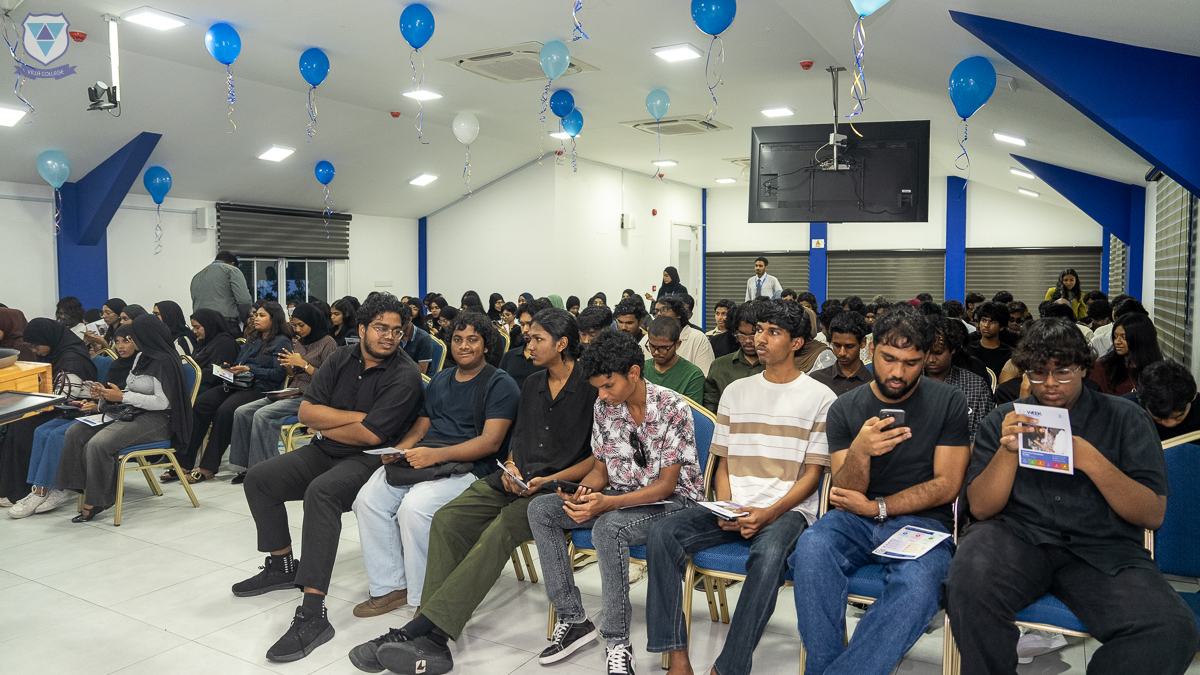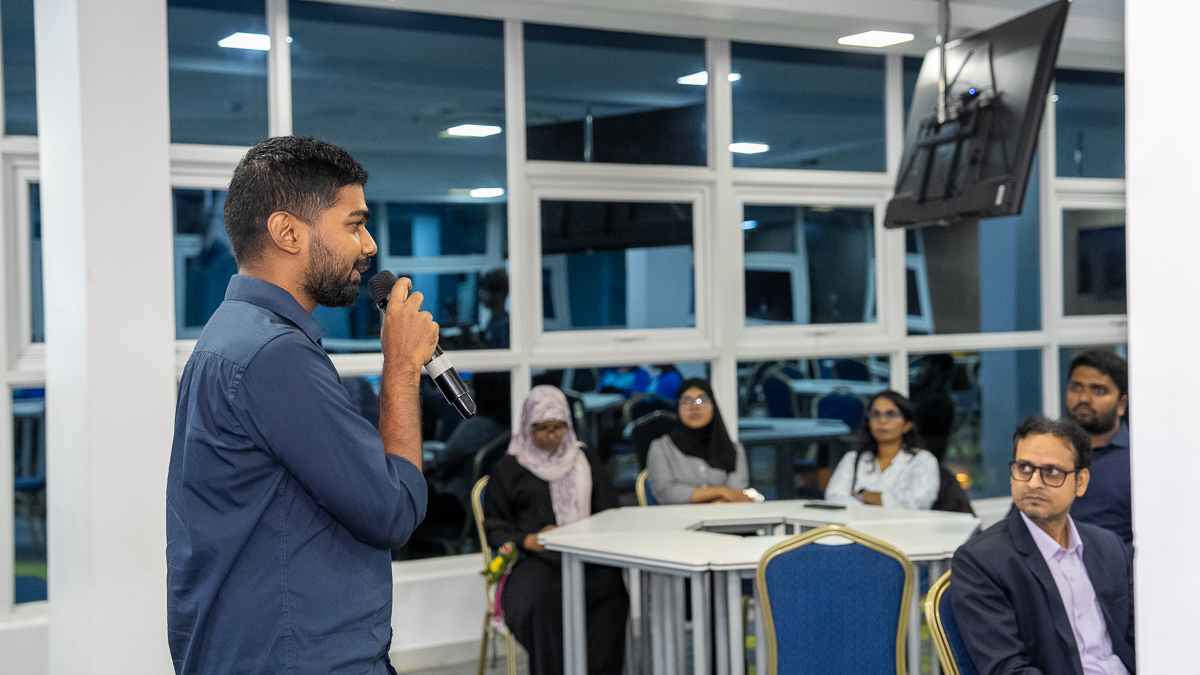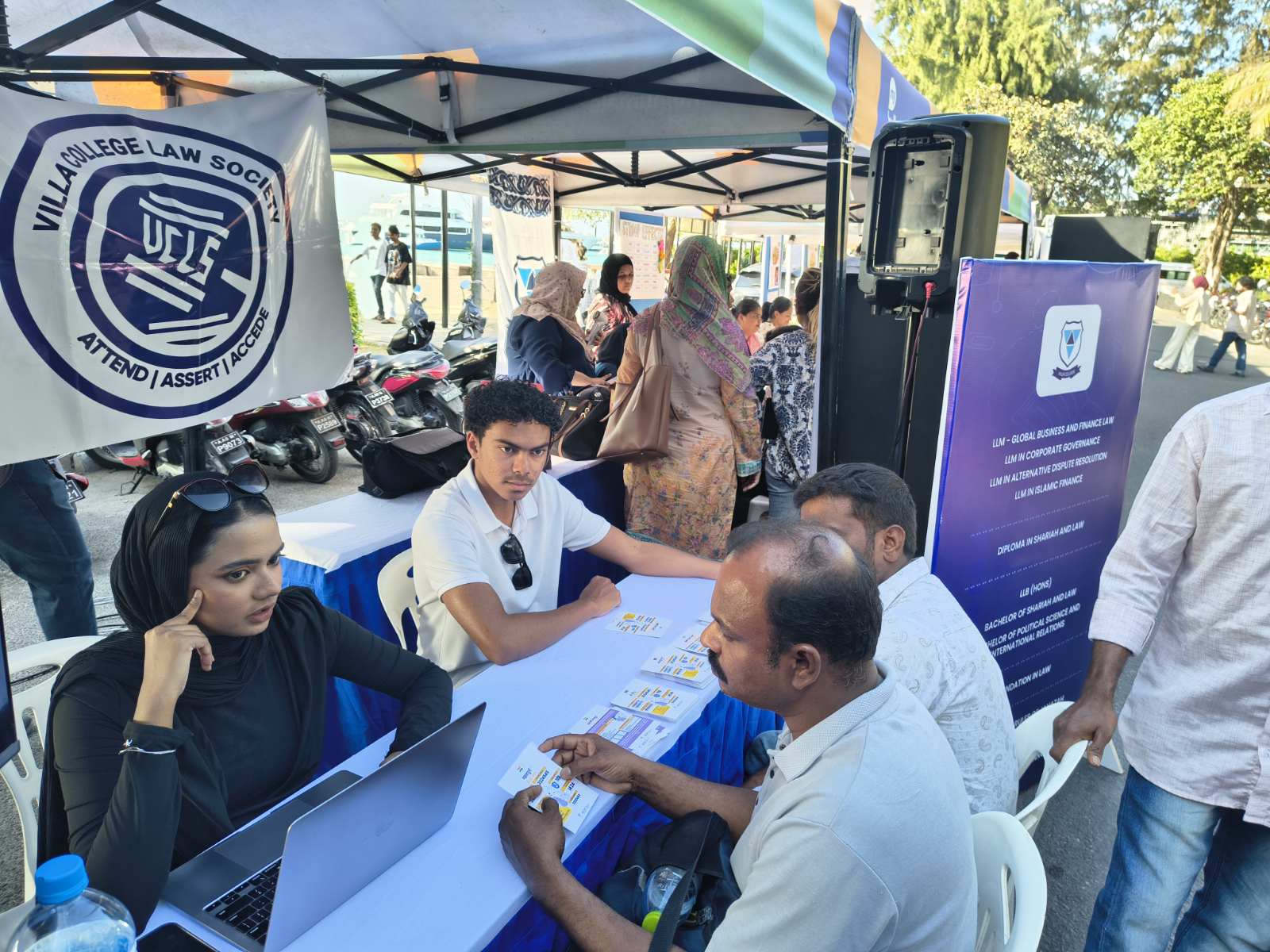
On 23 January 2026, the Faculty of Shariah and Law (FSL) at Villa College, in partnership with the Villa College Law Society (VCLS), organised a Legal Aid Camp in Hulhumalé dedicated entirely to migrant workers. The initiative provided pro bono legal services and consultancy to over 50 individuals, addressing issues at the heart of everyday dignity: labour rights, contractual obligations, and the legal frameworks designed to protect foreign employees in the Maldives.
Migrant workers represent one of the most vulnerable demographics in any society. They often navigate unfamiliar legal systems with limited access to reliable guidance, leaving them exposed to exploitation and uncertainty. The Hulhumalé Legal Aid Camp was designed to confront this reality directly. Rather than waiting for migrant communities to seek out legal support through conventional channels, Villa College brought that support to them. Participants received one-on-one guidance from law students and faculty members, helping to demystify complex legal procedures and fostering a genuine sense of security and belonging within the community.
This approach reflects a principle Villa College holds as non-negotiable: legal protection is not a privilege reserved for those who can afford it, but a right accessible to all. The camp's structure ensured that each individual's concerns were heard and addressed with care, transforming what could have been a general awareness session into a meaningful, personalised consultation.
One of the most significant outcomes of the Legal Aid Camp lies in what it offered Villa College's own students. Law programmes worldwide grapple with a persistent challenge, which is how to connect the rigour of academic legal theory with the unpredictable, human realities of legal practice. This initiative answered that challenge convincingly. By placing students in direct conversation with migrant workers facing real contractual disputes and labour rights concerns, the camp created a learning environment that no lecture hall can fully replicate.
Students engaged actively in community outreach, applying their understanding of Maldivian legal frameworks to guide individuals through specific, tangible problems. This kind of experiential learning builds competencies that extend well beyond examination performance. It cultivates empathy, sharpens communication skills, and develops the professional judgement that distinguishes a competent legal practitioner from an exceptional one.
Villa College's decision to organise this camp forms part of the institution's broader commitment to the United Nations Sustainable Development Goals. Two SDGs are particularly relevant here. The first is SDG 10, Reduced Inequalities, which calls on institutions to ensure that marginalised populations understand their legal protections and social rights. By equipping migrant workers with knowledge of the legal safeguards available to them, Villa College contributed directly to narrowing the information gap that perpetuates inequality. The second is SDG 16, Peace, Justice, and Strong Institutions, which emphasises the importance of inclusive legal assistance and the promotion of the rule of law at the grassroots level. The Hulhumalé camp exemplified this by making institutional legal expertise available to a community that is frequently overlooked by formal justice systems.
Initiatives like the Legal Aid Camp set a standard for what engaged higher education can look like in the Maldives. When an educational institution directs its intellectual resources toward solving real problems faced by real people, it strengthens public trust in the value of academic institutions. It also sends a clear message to prospective students: choosing Villa College means joining a community where learning is inseparable from service.
Villa College remains committed to expanding initiatives like this, ensuring that access to justice continues to grow across the Maldives, one community at a time.