Collaborative Parliamentary Research on Online Violence Against Women in Politics
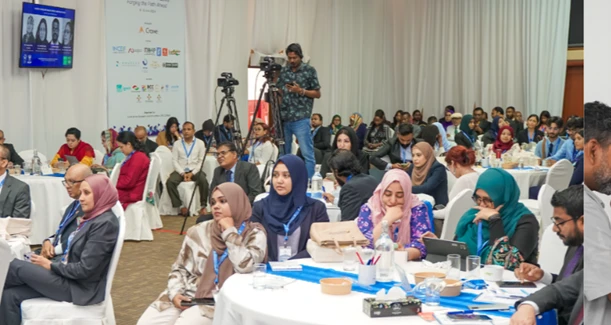
Villa College contributed to national policy-focused research through the Parliamentary Inquiry on Online Violence Against Women in Politics, undertaken in collaboration with the Human Rights and Gender Committee of the People's Majlis and the Westminster Foundation for Democracy (WFD). The initiative examined the challenges faced by women participating in political life due to online violence, particularly the implications for gender equality, political inclusion, human rights protection and democratic participation. Villa College served as the research lead, with its Faculty of Shariah and Law (FSL) and Institute for Research and Innovation (IRI) playing central roles in the collaborative research process. On 18 March 2025, the College participated in a research validation session at Meeruma Hotel, Malé, bringing together representatives from the People's Majlis, Attorney General's Office, WFD, Transparency Maldives, UNDP, political parties and other stakeholders. The session was led by Amish Abdullah of the Law department, Dr. Fazeela Ibrahim of IRI and Janet Veitch of WFD, who presented the inquiry outcomes for validation and facilitated discussions concerning research methodology, priority areas and institutional responses.
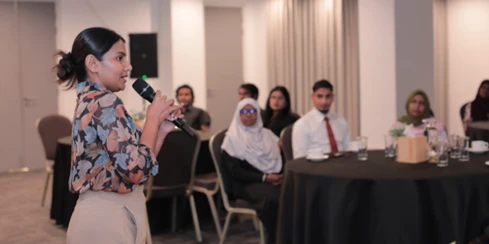
The initiative demonstrates Villa College's direct contribution to government-associated research and evidence-informed legislative inquiry, bringing academic expertise into the examination of online harassment and its effects on women's participation in political institutions. Through this partnership, the College supported the development of a research evidence base relevant to inclusive governance, gender-responsive legal protections and stronger democratic institutions.
Student-Led Parliamentary Research on Cybersecurity and Data Protection Governance in the Maldives
In October 2025, Villa College's Faculty of Shariah and Law, in collaboration with the Villa College Law Society (VCLS), initiated a policy-focused research project titled Empowering a Secure Digital Maldives: Student-Led Research on Policy and Legal Frameworks for Cybersecurity and Data Protection. Commissioned by the Westminster Foundation for Democracy (WFD) in collaboration with People’s Majlis, the initiative was designed to examine the adequacy of the Maldives' legal and institutional arrangements for protecting personal information, responding to cyber threats and ensuring accountability in an increasingly digital society.
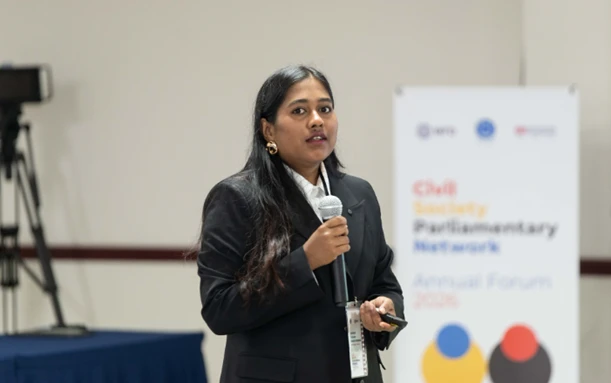
The research aims to address significant issues concerning data protection legislation, cybersecurity governance, institutional responsibilities, regulatory enforcement and the protection of fundamental rights. Its comparative legal framework examines approaches adopted under the European Union's General Data Protection Regulation and the Budapest Convention on Cybercrime, alongside digital governance practices in Estonia, Singapore, Mauritius and Seychelles.
The comparative approach is intended to identify policy responses appropriate to the Maldives' legal framework, institutional capacity and geographical characteristics as a Small Island Developing State.

The initiative adopts a student-led research model, bringing together members of the Villa College Law Society under the academic guidance of Dr. Mohammad Shekaib Alam, Amish Abdullah, Mohd Arsh Shery and Uza Asna Ahmed. The project provides a structured opportunity for students to contribute to research addressing national legal and regulatory challenges, while integrating academic supervision, comparative analysis and practical policy considerations. The initiative demonstrates Villa College's contribution to policy-oriented legal research, digital governance and institutional accountability, creating a research pathway through which academic expertise and student participation could inform national discussions on cybersecurity and data protection.
Government Partnership for National Research Development and Management
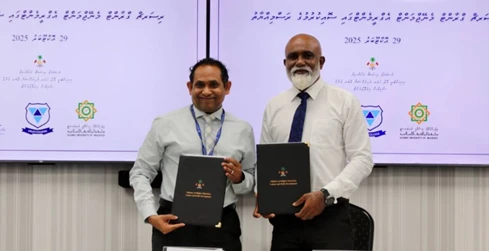
Villa College further strengthened its engagement with government-supported research through its appointment as a National Research Grant Management Partner, under an agreement with the National Research Council of the Ministry of Higher Education, Labour and Skills Development. On 29 October 2025, Villa College joined other higher education institutions in formalising an agreement with the National Research Council to support the administration and management of research funding addressing national development priorities. The partnership was subsequently announced through the College's official report, Villa College Recognised as National Research Grant Management Partner, published on 2 November 2025.
The initiative established a framework for supporting research in areas including governance, safety and wellbeing; economic development and sustainability; digital transformation and innovation; and environmental priorities under the Green Agenda. Through this agreement, Villa College strengthened its institutional role in facilitating research aligned with national needs and supporting the wider development of evidence-informed public policy, research administration and government–academic collaboration.
This partnership demonstrates the College's contribution to the national research ecosystem and establishes opportunities for future research cooperation with government authorities on matters relevant to sustainable development and institutional governance.
LL.M. Research Colloquium: Connecting Academic Research with Parliamentary Policymaking
On 17 August 2025, Villa College's Faculty of Shariah and Law conducted the LL.M. Research Colloquium 2025, focusing on Global Business and Finance Law. The colloquium brought together postgraduate law students and academic specialists to examine legal and governance challenges with potential implications for national legislation, regulatory development and institutional reform. The research presentations addressed issues including accountability in state-owned enterprises, employment protections, financial regulation, taxation, artificial intelligence and copyright law. Through comparative and doctrinal legal analysis, students examined Maldivian legal frameworks alongside international principles and regulatory approaches, generating research insights relevant to contemporary governance challenges.

The programme also established a proposed pathway for the presentation of postgraduate research findings to the Parliament of Maldives, connecting academic inquiry with the legislative environment. This initiative reflected Villa College's efforts to extend the practical relevance of postgraduate research beyond academic assessment by encouraging the development of findings capable of informing national policy discussions. The colloquium therefore contributed to the wider research-to-policy environment by developing legal scholarship relevant to public accountability, commercial regulation, institutional governance and legislative reform.
Environmental and Marine Law Research Supporting National Ocean Governance
Villa College strengthened its capacity for environmental and marine policy research through the establishment of the Centre for Transformative Environmental and Marine Law (CTEM) within the Faculty of Shariah and Law.
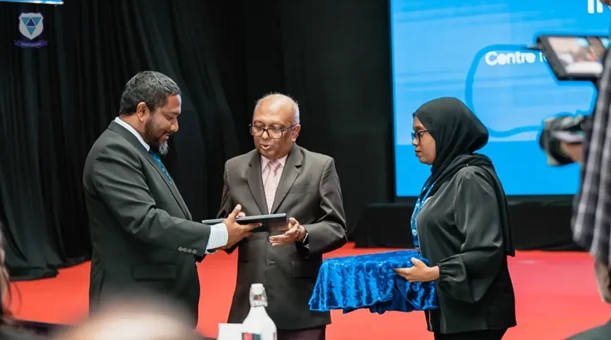
On 26 August 2025, the Centre was formally inaugurated by Dr. Amzath Ahmed, Minister of State for Fisheries and Ocean Resources, as part of the College's launch of new legal education and research initiatives. CTEM was established to provide a specialised academic platform for research, policy development and professional engagement concerning environmental justice, maritime regulation, fisheries governance, climate change and the sustainable management of marine resources.
During September 2025, CTEM participated in activities associated with regional and national fisheries-governance workshops involving the Ministry of Fisheries and Ocean Resources and the United Nations Division for Ocean Affairs and the Law of the Sea (DOALOS). These programmes addressed the implementation of international law-of-the-sea obligations, fisheries management and institutional capacity for sustainable ocean governance.
The Regional Workshop on the Law of the Sea and Ocean Governance was conducted from 20 to 23 September 2025, while the Maldives National Workshop on the Implementation of the United Nations Fish Stocks Agreement and Related Instruments took place from 23 to 25 September 2025. Both contributed to wider governmental and international efforts to strengthen understanding of relevant legal frameworks and the institutional requirements for implementing fisheries obligations.
CTEM's engagement helped connect academic expertise with discussions concerning international maritime law, national fisheries governance and environmental policy development. It also established an institutional foundation for future collaborative legal research relevant to the Maldives' ocean-based economy and international environmental responsibilities.
Research Dissemination on Governance and Institutional Development at ICSRI 2025
Villa College's Institute for Research and Innovation organised the 9th International Conference on Social Research and Innovation (ICSRI 2025) on 10–11 September 2025, under the theme Synergies of Discovery: Igniting Solutions for the Future. The conference provided a multidisciplinary research platform bringing together academics, professional stakeholders and government representatives to exchange evidence and perspectives on challenges relevant to national development. Its programme included research addressing legal and institutional protections for migrant workers in the Maldives, political self-determination and sovereignty, governance challenges in developing states, and the intersection of social inclusion, public policy and institutional effectiveness. These contributions provided opportunities to discuss research findings capable of informing the development of stronger, more responsive institutions.
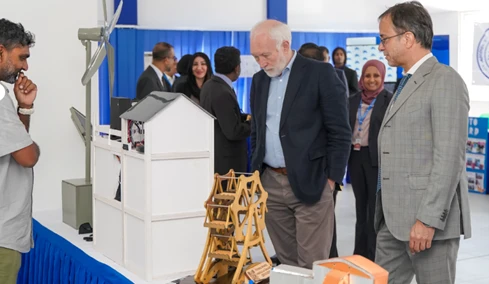
The conference also featured Dr. Ahmed Mohamed, Minister of State for Education, who delivered a keynote presentation on education and skills systems. The presence of government representation alongside academic research presentations supported dialogue between researchers and public-sector stakeholders on matters relevant to policy development and national institutional priorities.
Through ICSRI 2025, Villa College strengthened the dissemination of policy-relevant social research and interdisciplinary knowledge, creating opportunities for academic findings to reach stakeholders involved in government administration and public policy.